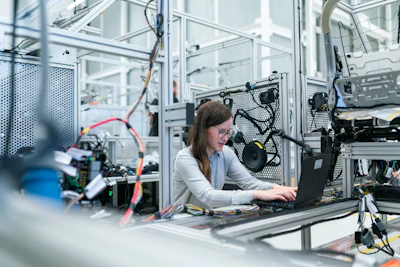
Walk into any modern grocery store and AI is already at work around you. Self-checkout cameras identify items without barcodes. Dynamic pricing algorithms adjust shelf tags in real time. Warehouse robots restock shelves overnight. Yet the most transformative shift is happening in your pocket: AI-powered apps are giving everyday shoppers the same produce-analysis tools that commercial buyers have relied on for decades.
In this post, we'll look at where AI stands in grocery retail today, how computer vision is revolutionizing produce quality assessment, and why PluckFresh was built to put that power directly in consumers' hands.
The Current State of AI in Grocery Retail
Grocery is a $1.5 trillion industry in the United States alone, and it's undergoing one of the most rapid technology transformations in its history. AI is already embedded in three major areas:
Self-Checkout and Loss Prevention
Modern self-checkout kiosks use computer vision to identify products, detect scanning errors, and flag potential theft. These systems process millions of visual inputs every day, learning to distinguish between a Fuji apple and a Honeycrisp without requiring a barcode scan. The same technology powers "just walk out" stores where cameras track every item you pick up.
Inventory and Supply Chain
Predictive algorithms analyze sales patterns, weather forecasts, local events, and seasonal trends to determine exactly how much of each product to stock. The result: fewer empty shelves for shoppers and significantly less unsold food heading to landfills. Major chains report 20–30% reductions in produce waste after implementing AI-driven inventory systems.
Personalized Recommendations
Loyalty programs and online grocery platforms use machine learning to surface products you're likely to want based on purchase history, dietary preferences, and even time of year. This goes beyond "customers who bought X also bought Y" — modern recommendation engines factor in nutritional goals, allergy profiles, and household size.
Retailers are investing billions in AI infrastructure, but until recently, almost none of that technology has been available to the shopper standing in the produce aisle, trying to figure out which avocado to buy.
Computer Vision for Produce Quality: What AI Actually Sees
When you look at a peach, you might notice whether it's red or yellow, firm or soft. A computer vision model trained on produce quality sees far more. Here's what modern AI analyzes in a single image:
- Color distribution — Not just "is it green or red?" but the precise ratio and spatial pattern of color across the entire surface. Subtle shifts in hue that the human eye averages out can indicate early-stage ripening or the beginning of decay.
- Surface texture — Micro-textures like wrinkling, dehydration patterns, and waxy sheen changes are strong indicators of freshness. AI models detect these at a resolution well beyond casual human observation.
- Shape anomalies — Bruising often causes localized swelling or depression before discoloration appears. Computer vision catches geometric irregularities that predict brown spots days before they become visible.
- Stem and calyx condition — The state of stem attachment, dryness, and surrounding tissue provides reliable freshness signals for dozens of fruit and vegetable types.
- Blemish classification — Not all marks are equal. AI distinguishes cosmetic blemishes (which don't affect taste or safety) from pathological damage (mold precursors, insect damage, fungal spots), helping you avoid only the produce that's actually compromised.
Commercial produce operations have used multi-spectral imaging and sorting machines with these capabilities for years. The difference now is that smartphone cameras — combined with efficient on-device AI models — are powerful enough to perform meaningful quality assessment from a single photo.
Did You Know
A trained computer vision model can evaluate over 2,000 visual data points in a single produce image — analyzing the photo in under three seconds. The average shopper, by contrast, relies on roughly 3–5 subjective cues (color, firmness, smell) and often gets it wrong with unfamiliar items.
How PluckFresh Brings Commercial-Grade Analysis to Your Phone
PluckFresh was built on a simple premise: the technology that commercial produce buyers use to accept or reject entire pallets of fruit should be available to anyone buying a single apple.
Here's how it works. You open the app, point your camera at a piece of produce, and in about three seconds, PluckFresh returns:
- A freshness score on a clear, intuitive scale
- Estimated days of remaining peak quality
- Specific storage recommendations based on current ripeness
- Best-use suggestions — whether the item is ideal for eating raw, cooking, or freezing
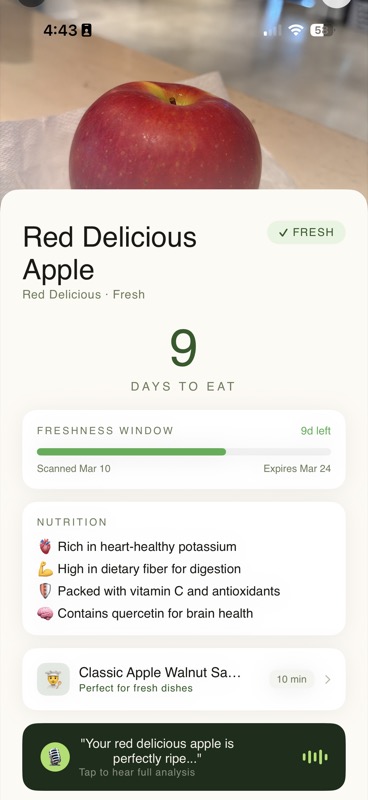
The underlying model was trained on a large dataset of produce images spanning dozens of fruit and vegetable varieties, multiple ripeness stages, and a wide range of quality conditions. It continues to improve as more data becomes available — meaning PluckFresh gets smarter with every scan across its user base.
Critically, the analysis runs efficiently on your device. You don't need to upload high-resolution photos to a server and wait. The result is a fast, private, in-store experience that works even with a spotty cell connection.
PluckFresh Tip
For the most accurate scan, hold your phone 6–10 inches from the produce in good lighting. Natural light or bright store lighting works best. Avoid casting a shadow over the item with your phone.
Smart Shopping Lists and Personalized Nutrition
Scanning produce is just the starting point. AI is also transforming how we plan what to buy in the first place.
Lists That Learn
Traditional shopping lists are static — you write items down and check them off. AI-powered lists adapt to your habits. They learn that you buy bananas every week, that you tend to need more greens after the weekend, and that your household goes through avocados faster in summer. Over time, the app can suggest items before you think to add them.
Nutrition-Aware Shopping
Pairing purchase data with nutritional databases opens up an entirely new capability: your shopping list can flag nutritional gaps. If you haven't bought a good source of vitamin C in two weeks, or if your cart is heavy on processed foods and light on whole produce, AI can surface gentle suggestions to balance things out — without being preachy about it.
Waste-Reducing Recommendations
AI can also factor in what's already in your fridge. If you scanned a bunch of bananas three days ago and they're approaching peak ripeness, your smart list might suggest banana bread ingredients instead of a new bunch. This kind of context-aware shopping directly reduces the 30–40% of food that American households waste every year.
Shop Smarter, Waste Less
PluckFresh's AI-powered produce scanner gives you freshness scores, storage tips, and best-use suggestions in seconds. Free for iOS.
Get Notified at LaunchThe Future: AR Overlays, Real-Time Alerts, and Predictive Shopping
If current AI capabilities are impressive, the near-term roadmap is even more compelling. Here's what's coming to grocery shopping over the next few years:
Augmented Reality in the Produce Aisle
Imagine holding up your phone in the produce section and seeing freshness scores overlaid on every item in view. AR technology combined with real-time computer vision will let you scan an entire display of peaches at a glance, instantly identifying the ripest ones without touching a single fruit. Early prototypes already exist; consumer-ready versions are likely within two to three years.
Real-Time Freshness Alerts at Home
Smart refrigerators equipped with internal cameras and AI will track the state of your produce after you bring it home. You'll get a notification: "Your strawberries have about one day of peak freshness left — use them tonight or freeze them." Combined with recipe suggestions, this turns your fridge into an active participant in reducing food waste.
Predictive Shopping That Knows Your Rhythms
AI models that combine your purchase history, the current contents of your fridge, your calendar (hosting a dinner party Saturday?), and local store inventory could generate a fully optimized shopping list every week — balancing nutrition, budget, freshness windows, and personal taste preferences. The shopper reviews and adjusts; the AI handles the heavy lifting.
Looking Ahead
PluckFresh's roadmap includes features like multi-item batch scanning, fridge inventory tracking, and expiration reminders — all designed to close the loop between buying smart and eating well. Sign up for updates to be the first to try new features.
Privacy and Trust: How PluckFresh Handles Your Data
Any conversation about AI in daily life has to address the elephant in the room: data privacy. If an app is analyzing what you buy and eat, what happens to that information?
PluckFresh is built with a privacy-first architecture. Here are the core principles:
- On-device processing — Produce scans are analyzed locally on your phone whenever possible. Your images don't need to travel to a remote server for basic freshness scoring.
- No personal data required — You can use PluckFresh's scanner without creating an account or providing any personally identifiable information.
- No data sales — PluckFresh does not sell user data to third parties. Period.
- Transparent policies — Our privacy policy is written in plain language, not legal jargon, so you can actually understand what data is collected and why.
- User control — Any optional data you do share (like scan history for personalized features) can be deleted at any time from within the app.
Trust is earned, not assumed. As AI becomes more embedded in everyday tasks like grocery shopping, the companies building these tools have a responsibility to be transparent about how they work and what they collect. PluckFresh takes that responsibility seriously.
FAQ: AI in Grocery Shopping
How is AI used in grocery shopping today?
AI powers self-checkout systems (computer vision for product identification), inventory management (predictive algorithms that reduce waste and stockouts), personalized recommendations on loyalty apps and e-commerce platforms, and consumer tools like PluckFresh that use computer vision to assess produce freshness in real time.
Can AI really tell if produce is fresh?
Yes. Computer vision models analyze thousands of visual markers — color distribution, surface texture, shape irregularities, and stem condition — to estimate freshness with high accuracy. PluckFresh brings this capability to your smartphone camera, delivering a freshness score and storage tips in about three seconds.
Is PluckFresh free?
PluckFresh will be free to download on iOS at launch. The core produce scanning feature is included at no cost.
Does PluckFresh collect my personal data?
PluckFresh is designed with privacy first. Scans are processed on-device whenever possible, no personal information is required to use the scanner, and PluckFresh never sells user data to third parties. Read our full privacy policy for details.
What's next for AI in grocery stores?
The near-term future includes AR overlays that display freshness scores as you browse the produce aisle, smart fridge cameras that alert you when items are nearing expiration, and predictive shopping lists that learn your household's consumption patterns and optimize for nutrition, budget, and minimal waste.
The Future of Grocery Shopping Starts Here
Scan any fruit or vegetable and get an instant AI-powered freshness assessment. PluckFresh is launching soon — free for iOS.
Get Notified at Launch