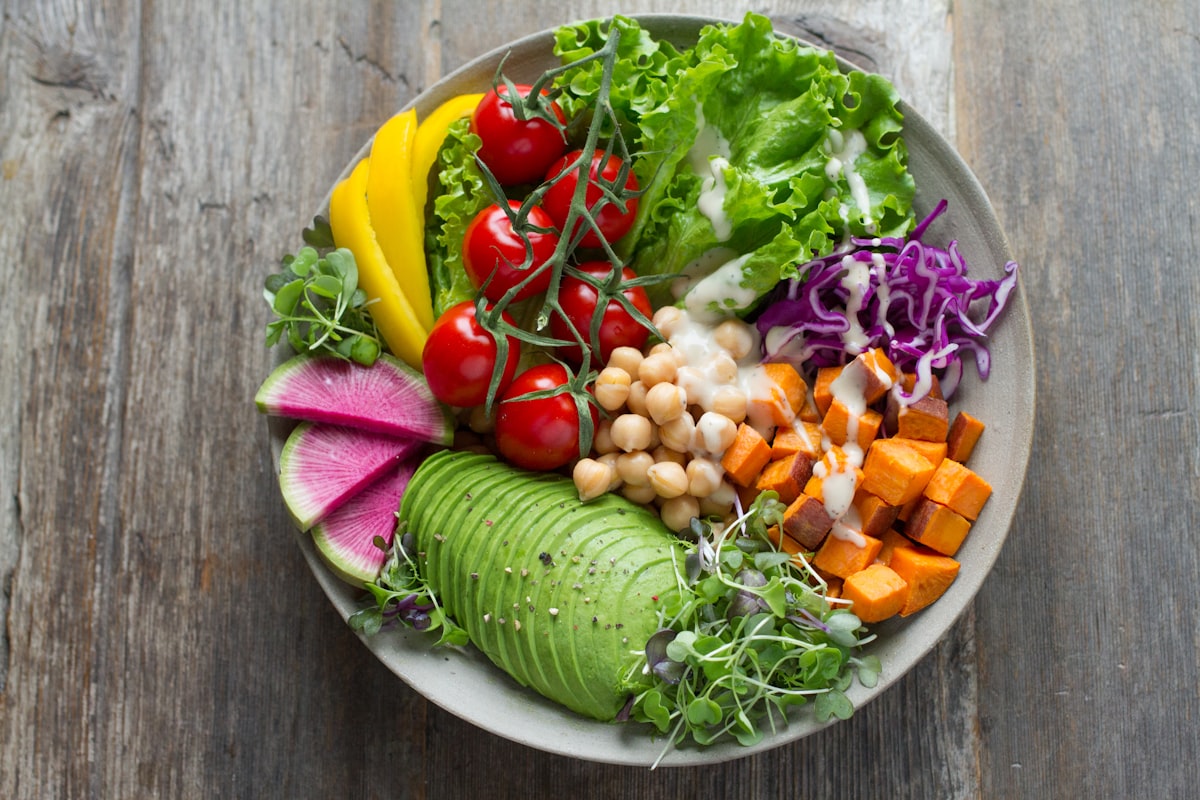
The most common complaint about healthy eating is predictable: "I can't get enough protein without the calories adding up." It's a fair concern. Lean chicken breast is effective but boring. Protein shakes feel like a compromise. And most restaurant "healthy bowls" quietly tip past 700 calories once the dressing hits.
The solution is simpler than most people think: build your meals around fresh, peak-quality produce and layer in smart protein sources. The result is a bowl that's vibrant, filling, nutrient-dense, and clocks in under 500 calories with 25g or more of protein. Here are four of our favorites.
Why Produce-Forward Bowls Are the Best High-Protein Meal Format
Bowl meals work because they solve three problems at once. First, they let you control macros precisely — you see every ingredient, and adjusting portions is effortless. Second, the produce base provides volume without excess calories: two cups of leafy greens add bulk, fiber, and micronutrients for under 20 calories. Third, bowls are infinitely adaptable. Swap the grain, change the protein, rotate seasonal vegetables, and you never eat the same meal twice.
But there's a catch that most recipe blogs ignore: the freshness of your produce directly affects both the nutritional value and the taste of the final bowl. Wilted spinach can lose up to 50% of its folate and vitamin C content compared to fresh leaves. Overripe tomatoes break down into mush under a warm grain. A mealy avocado ruins the texture of the entire meal.
A produce bowl is only as good as its freshest ingredient. Start with peak-quality vegetables and fruit, and even the simplest seasoning will taste extraordinary.
PluckFresh Tip
Before you shop for bowl ingredients, scan your produce with PluckFresh's freshness scanner. You'll get an instant freshness score, estimated days of peak quality remaining, and storage recommendations — so you know exactly which vegetables to buy for today's bowls and which to save for later in the week.
The 4 Recipes
Each recipe below serves one, includes complete ingredient lists and step-by-step instructions, and has been calculated for accurate macros. All four come in under 500 calories with at least 25g of protein.

1. Greek Power Bowl
Ingredients
- 5 oz grilled chicken breast, sliced
- 1/2 cup cooked quinoa
- 1/2 English cucumber, diced
- 1 cup cherry tomatoes, halved
- 2 tbsp crumbled feta cheese
- 1/4 cup Kalamata olives, halved
- 2 cups mixed greens
- 1 tbsp extra-virgin olive oil
- 1 tbsp red wine vinegar
- 1/2 tsp dried oregano
- Salt and pepper to taste
Instructions
- Cook quinoa according to package directions. Fluff with a fork and let cool to room temperature.
- Season chicken breast with oregano, salt, and pepper. Grill over medium-high heat for 6–7 minutes per side until the internal temperature reaches 165°F. Let rest for 5 minutes, then slice against the grain.
- Whisk together olive oil, red wine vinegar, dried oregano, a pinch of salt, and pepper to make the dressing.
- Arrange mixed greens as the bowl base. Add quinoa to one side, then fan the sliced chicken alongside it.
- Top with diced cucumber, halved cherry tomatoes, crumbled feta, and Kalamata olives.
- Drizzle with dressing and serve immediately.
Produce Freshness Tips
Cucumber: Look for firm, dark green skin with no soft spots or wrinkling. English cucumbers should feel heavy for their size. Store wrapped in a dry paper towel in the fridge for up to 5 days.
Cherry tomatoes: Choose deeply colored, plump tomatoes that are firm but not hard. Avoid any with cracks or wrinkled skin near the stem. Store at room temperature for best flavor; refrigerate only if they're very ripe and you need another day or two.

2. Spicy Black Bean & Corn Bowl
Ingredients
- 3/4 cup canned black beans, drained and rinsed
- 1/2 cup corn kernels (fresh or frozen, thawed)
- 1/4 ripe avocado, sliced
- 1/2 red bell pepper, diced
- 1 small jalapeño, seeded and minced
- 1/2 cup cooked brown rice
- 2 cups chopped romaine lettuce
- 2 tbsp fresh cilantro, chopped
- Juice of 1 lime
- 1 tsp cumin
- 1/2 tsp smoked paprika
- 1/2 tsp chili powder
- Salt to taste
- 2 tbsp salsa verde
Instructions
- Cook brown rice according to package directions. Set aside.
- In a small skillet over medium heat, warm the black beans with cumin, smoked paprika, and chili powder for 3–4 minutes, stirring occasionally. Add a splash of water if they start to stick.
- If using fresh corn, char the kernels in a dry hot skillet for 2–3 minutes until lightly blackened in spots.
- Arrange chopped romaine as the bowl base. Add brown rice, seasoned black beans, and charred corn in sections.
- Top with diced bell pepper, sliced avocado, minced jalapeño, and fresh cilantro.
- Squeeze lime juice over everything, add salsa verde, and toss gently or serve as arranged.
Produce Freshness Tips
Avocado: For slicing into a bowl, you want an avocado that yields slightly to gentle palm pressure but still holds its shape. Use our full avocado ripeness guide or scan with PluckFresh for a precise freshness reading.
Bell pepper: Fresh peppers should be glossy, firm, and heavy for their size. Wrinkled skin or a soft stem end means they're past peak. Store in the crisper drawer for up to a week.
Corn: If buying fresh, look for bright green, tightly wrapped husks and moist, golden silk. Peel back a small section to check for plump, evenly spaced kernels. Use within 2 days of purchase for maximum sweetness.
Meal Prep Tip
The Spicy Black Bean Bowl is the best candidate for batch prep. Cook the beans and rice in bulk, char a large batch of corn, and store them separately for up to 4 days. Assemble with fresh lettuce and avocado the morning you plan to eat. Avocado browns quickly — always add it last.

3. Teriyaki Salmon Bowl
Ingredients
- 5 oz salmon fillet, skin-on
- 1/2 cup cooked brown rice
- 1/3 cup shelled edamame
- 1/2 ripe mango, cubed
- 1/4 English cucumber, sliced into half-moons
- 1 cup baby spinach
- 1 tbsp low-sodium soy sauce
- 1 tbsp mirin
- 1 tsp honey
- 1/2 tsp fresh ginger, grated
- 1 tsp sesame seeds
- 1 green onion, thinly sliced
Instructions
- Whisk together soy sauce, mirin, honey, and grated ginger to make the teriyaki glaze.
- Pat salmon dry and season with salt and pepper. Sear in a non-stick skillet over medium-high heat, skin-side down, for 4 minutes. Flip, brush the top with half the teriyaki glaze, and cook for another 3–4 minutes until the center is just opaque.
- Cook brown rice according to package directions. Steam edamame for 3–4 minutes.
- Arrange baby spinach and brown rice as the bowl base. Place the salmon fillet on top.
- Add edamame, cubed mango, and sliced cucumber around the salmon.
- Drizzle remaining teriyaki glaze over the bowl. Garnish with sesame seeds and sliced green onion.
Produce Freshness Tips
Mango: A ripe mango should give slightly when pressed and have a fruity aroma near the stem. Color varies by variety, so don't rely on it alone. Avoid mangoes with wrinkled skin or dark, sunken spots. Store ripe mangoes in the fridge for up to 3 days.
Baby spinach: Fresh spinach leaves should be vibrant green, crisp, and dry. Reject any bags or bunches with slimy or yellowing leaves — that's a sign of decay that spreads quickly. Use within 3–5 days of purchase and store in a container lined with a dry paper towel.

4. Roasted Chickpea & Sweet Potato Bowl
Ingredients
- 3/4 cup canned chickpeas, drained, rinsed, and patted dry
- 1 medium sweet potato, cubed (about 1 cup)
- 2 cups lacinato kale, stems removed, leaves torn
- 1 tbsp tahini
- 1 tbsp lemon juice
- 1 tbsp warm water
- 1 tsp olive oil
- 1/2 tsp cumin
- 1/2 tsp smoked paprika
- 1/4 tsp garlic powder
- Pinch of cayenne (optional)
- 2 tbsp pickled red onion (optional garnish)
- Salt and pepper to taste
Instructions
- Preheat oven to 425°F. Line a baking sheet with parchment paper.
- Toss cubed sweet potato with 1/2 tsp olive oil, a pinch of salt, and pepper. Spread on one half of the baking sheet.
- Toss dried chickpeas with 1/2 tsp olive oil, cumin, smoked paprika, garlic powder, and cayenne if using. Spread on the other half of the baking sheet.
- Roast for 25–30 minutes, tossing halfway through, until sweet potatoes are tender and chickpeas are golden and crispy.
- While roasting, massage kale with a squeeze of lemon juice and a pinch of salt for 2 minutes until leaves soften and darken.
- Whisk tahini, remaining lemon juice, and warm water until smooth and pourable. Season with salt.
- Arrange massaged kale as the bowl base. Top with roasted sweet potato and crispy chickpeas. Drizzle with tahini dressing and garnish with pickled red onion if desired.
Produce Freshness Tips
Sweet potato: Choose firm sweet potatoes with smooth, unblemished skin. Avoid any with soft spots, sprouts, or cracks. Store in a cool, dark place (not the fridge) for up to 2 weeks.
Kale: Look for deeply colored, sturdy leaves with no yellowing or wilting. The stems should be moist at the cut end. Lacinato (dinosaur) kale holds up better in bowls than curly kale. Store in a loosely sealed bag in the crisper for up to 5 days.
Scan First, Cook Better: How Freshness Drives Nutrition
Here's a fact that changes how you think about meal prep: the nutritional content of produce isn't static. A study published in the Journal of Agricultural and Food Chemistry found that spinach stored at room temperature for just 4 days lost up to 47% of its folate and a significant portion of its carotenoid content. Broccoli can lose 50% of its vitamin C within a week of harvest.
When you're building a bowl specifically for its nutritional profile — maximizing protein, hitting fiber targets, getting a broad spectrum of micronutrients — the freshness of your produce isn't a nice-to-have. It's the difference between a genuinely nutritious meal and a calorie-efficient one that's missing half the vitamins you think it contains.
This is where scanning your produce before you buy (or before you cook with what's already in your fridge) makes a measurable difference. PluckFresh analyzes visual freshness indicators in seconds, giving you a clear picture of whether those kale leaves are still at their nutritional peak or whether you should swap in something fresher.
Pro Tip
Build your weekly bowl menu around what's freshest, not the other way around. Scan the produce in your fridge on Sunday evening. If your kale is still peak but your spinach is fading, make the Chickpea & Sweet Potato Bowl first and save the Teriyaki Salmon Bowl (with fresh spinach from Monday's shopping trip) for later in the week.
Customizing Your Bowls: Protein Swaps That Work
One of the best things about bowl meals is their flexibility. Here are protein swaps that keep calories and protein in the same range:
- Chicken → Turkey breast: Nearly identical macros. Season the same way.
- Salmon → Shrimp: Swap 5 oz salmon for 6 oz shrimp. Slightly lower fat, similar protein.
- Black beans → Lentils: Cooked green lentils have slightly more protein per cup. Great with the same southwestern seasonings.
- Chickpeas → White beans: Cannellini beans roast beautifully and offer a creamier texture.
- Any protein → Firm tofu: Press, cube, and bake at 400°F for 25 minutes. Season to match the bowl's flavor profile. Adds about 20g protein per 7 oz serving.
FAQ: High-Protein Produce Bowls
Can produce bowls really provide enough protein?
Absolutely. By combining produce-forward ingredients with lean proteins like chicken, salmon, or plant-based options like black beans and chickpeas, a single bowl can deliver 25–38g of protein while keeping calories under 500. The key is strategic layering: a protein source, a whole grain for sustained energy, and plenty of fresh vegetables for volume and micronutrients.
How do I keep produce bowls fresh for meal prep?
Store dressing separately to prevent sogginess. Keep wet ingredients like tomatoes and mango in separate containers from grains and greens. Prep proteins and grains up to 4 days ahead, but assemble bowls the morning you plan to eat them. If you use compartmented meal prep containers, you can keep layers separated and combine right before eating.
Why does produce freshness matter for high-protein bowls?
Fresh produce at peak ripeness contains significantly higher levels of vitamins, antioxidants, and micronutrients. Wilted spinach can lose up to 50% of its folate content, and overripe vegetables lose fiber integrity and flavor. When you're building a meal optimized for nutrition, starting with the freshest possible ingredients makes a real difference in what you're actually consuming.
Are these bowls suitable for vegetarians?
Two of the four recipes — the Spicy Black Bean & Corn Bowl and the Roasted Chickpea & Sweet Potato Bowl — are fully vegan. The Greek Power Bowl works well with marinated tofu or extra chickpeas in place of chicken, and the Teriyaki Salmon Bowl is excellent with teriyaki-glazed firm tofu instead of salmon.
Build Better Bowls With Better Produce
PluckFresh's AI-powered freshness scanner helps you pick peak-quality ingredients for every recipe. Scan, score, and shop smarter. Free for iOS.
Get Notified at Launch

